




It’s Inevitable
Terminations can be one of the trickiest parts of running a business. No employer enjoys letting someone go, but sometimes it’s unavoidable. In British Columbia, there are two main types of terminations: with cause and without cause. Each comes with very different requirements, risks, and responsibilities for the employer. Understanding the distinction is key to protecting your business, treating employees fairly, and staying compliant with BC’s Employment Standards Act.
The Tricky Part
Terminations can be one of the trickiest parts of running a business. No employer enjoys letting someone go, but sometimes it’s unavoidable. In British Columbia, there are two main types of terminations: with cause and without cause. Each comes with very different requirements, risks, and responsibilities for the employer. Understanding the distinction is key to protecting your business, treating employees fairly, and staying compliant with BC’s Employment Standards Act.
Termination With Cause
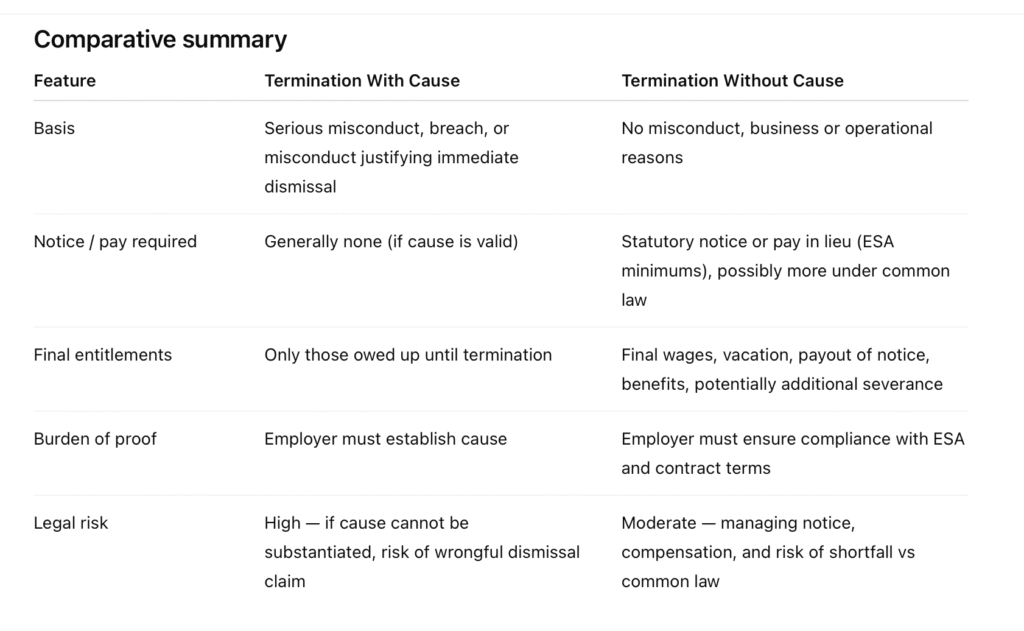
A “with cause” termination (sometimes called “just cause”) happens when an employee engages in serious misconduct that makes continuing the employment relationship impossible. This could include theft, fraud, workplace violence, or repeated insubordination. If cause is valid, the employer does not have to provide notice or severance.
Because this is the most severe form of termination, the bar for proving cause is extremely high. Employers must show clear, well-documented evidence of the misconduct. If they cannot, they risk a wrongful dismissal claim.
Employer requirements for with cause:
- Clear evidence of serious misconduct (e.g. theft, fraud, violence) – If it is intentional, it can be classified as termination with cause.
- Documentation of incidents, warnings, or performance issues.
- Progressive discipline in less severe cases (warnings, improvement plans).
- Consistent application of policies and standards.
- A fair and unbiased investigation before dismissal.
- No notice or severance owed if cause is proven.
Termination Without Cause
A “without cause” termination occurs when an employee is let go for reasons unrelated to misconduct, such as restructuring, downsizing, or financial pressures. These terminations are lawful in BC as long as the employer provides the required notice or severance.
The ESA sets out minimum notice requirements, but employees may also be entitled to more under common law, depending on their role, age, and length of service. Even when following the law, respectful communication and proper documentation go a long way in protecting your business and reputation.
Employer requirements for without cause:
- Provide written notice or pay in lieu of notice (minimums under the ESA are 1 week after 3 months of service, up to a maximum of 8 weeks after 8 years).
- Pay out final wages, accrued vacation, and any outstanding entitlements.
- Apply group-termination rules if 50+ employees are affected.
- Ensure the termination is not discriminatory or retaliatory.
- Consider common law entitlements, which may exceed ESA minimums.
- Provide a clear termination letter and timeline for final pay.
What Happens if Termination is Done Incorrectly?
Getting a termination wrong can be costly for BC employers. If an employee is dismissed without proper notice, pay, or a defensible reason, the employer may face:
- Wrongful dismissal claims: If an employee challenges the termination in court, they may be awarded damages well beyond ESA minimums — sometimes up to 24 months of pay, depending on their age, tenure, and position.
- Employment Standards Branch complaints: Employees can file a claim with the Employment Standards Branch if notice or severance was not paid correctly. This can lead to mandatory compensation orders, plus interest.
- Human Rights complaints: If the termination is found to be discriminatory (e.g., based on age, gender, disability, or another protected ground), employers can face penalties, reputational damage, and compensation awards.
- Reinstatement or damages: In unionized workplaces, wrongful termination can result in the employee being reinstated with back pay.
- Reputational harm: Beyond the financial costs, mishandling a termination can damage employer branding, team morale, and future recruitment efforts.
In short, treating termination lightly can lead to bigger headaches than keeping the employee on. Following BC’s ESA and seeking professional guidance helps reduce these risks.

What Happens if an Employment Standards Complaint is Filed?
If a terminated employee believes their dismissal wasn’t handled properly, they can file a complaint with the Employment Standards Branch (ESB) in BC. This process is designed to resolve disputes between employers and employees about issues like termination, unpaid wages, or severance.
Here’s what a business can expect if a complaint is filed:
- Complaint submission
- The employee submits a written complaint to the ESB.
- The complaint must be filed within 6 months of when the issue occurred.
- Employer notified
- The business will receive a notice of complaint and will be asked to respond with details, documents, and any evidence related to the termination (e.g., contracts, payroll records, disciplinary notes).
- Early resolution
- An ESB officer may try to resolve the matter informally by talking to both parties.
- Many cases are settled at this stage if the employer agrees to pay outstanding wages or notice.
- Investigation / adjudication
- If early resolution fails, an investigation will be opened.
- Both parties can submit written evidence, and an adjudicator will review the facts.
- Determination issued
- The ESB will issue a written decision (called a Determination) stating whether the employer is in violation of the ESA.
- If so, the business may be ordered to:
- Pay unpaid wages or compensation.
- Pay interest on outstanding amounts.
- Pay administrative penalties (fines).
- Appeal process
- Employers have the right to appeal a Determination to the Employment Standards Tribunal, but appeals require strong evidence and must be filed within strict deadlines.
- Enforcement
- If an employer does not comply, the Determination can be filed in court and enforced like a judgment. This can include collections or garnishments.

Here’s What They Don’t Tell You
The reality is, when it comes to employment standards complaints, the odds are rarely in the employer’s favour. In most cases, the business ends up paying the employee regardless. And if you choose to escalate to a formal investigation and lose, the costs add up quickly:
- The initial payout (wages or severance owed).
- 4% vacation pay.
- Interest accrued on the amount owed.
- A $500 administrative fine.
For a small business, you can really feel these costs — not to mention the time, stress, and reputational impact of going through the process.
That’s why it’s so important to get terminations right the first time. Perk HR can help take the stress out of it, guiding you through proper procedures, ensuring compliance with BC’s Employment Standards Act, and protecting your business from unnecessary risk.